Seven standards for effective bearing maintenance training
The measure of effective bearing maintenance training is not what is covered in the room. It is how much of it transfers to the plant, and how much is still being practised months later.
A course can be technically accurate, professionally presented and well received on the day without changing what happens at the workbench. Effective training has to transfer into daily maintenance practice.
Having built and delivered training across mining, cement, food and beverage, pulp and paper and general industry, these are the seven standards we hold our own courses to. They are a fair way to evaluate bearing maintenance training regardless of who delivers it.
1. It starts by finding the real need
Before booking a course, establish whether training is needed and where the need sits. This requires care.
Most experienced fitters have been mounting and maintaining bearings for years, and much of what they know is sound, developed through direct experience with the plant’s equipment. Nobody responds well to the assumption that their practice is wrong.
A structured training needs assessment lets the findings speak for themselves. It confirms areas of strength while identifying specific gaps in knowledge or technique, and those gaps are often not where management expected them. A team may understand bearing identification well but need support with lubrication intervals, mounting methods or failure recognition.
Techniques develop over time. Fitment tools evolve, methods improve and new technicians join the team, so there is value for developing employees and experienced artisans alike. The objective is not to replace experience. It is to strengthen it with current, consistent practice.
2. It is taught by a bearing specialist, not a presenter
Anyone familiar with a set of slides can deliver a syllabus. A specialist trainer brings knowledge that extends beyond the prepared material.
This becomes clear when a delegate asks about a specific machine, an unusual bearing arrangement or a failure that does not match the standard examples. A trainer with practical depth can examine the question, identify the important variables and explain the principles that apply.
The trainer does not need to know every machine. The trainer does need enough technical and practical understanding to move from general principles to a credible discussion of a real application. Experienced delegates test for this, and they recognise the difference quickly.
3. It is practical
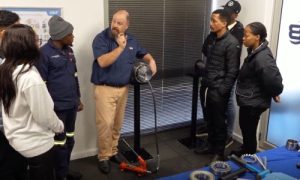
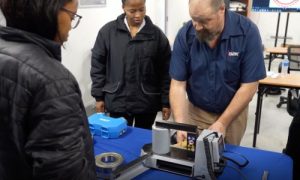
Bearing maintenance is physical work. Effective training puts tools in delegates’ hands: mounting and dismounting on fitment stations, controlled heating, lubrication performed rather than described, and real failure samples examined rather than viewed in photographs. Delegates need to use the tools, follow the method and correct mistakes in a controlled setting.
Screen-based learning can introduce principles and improve awareness, but on its own it rarely changes what happens at the workbench. The gap between understanding a method and performing it correctly is significant.
The flagship Bearings and Maintenance course combines theory with practical work on dedicated fitment stations, using bearing heaters, hydraulic nuts for large bearings, clearance measurement instruments and real failure samples.
4. It reflects your plant
Bearings do not fail in generic environments. They operate on specific equipment, under specific loads, at particular speeds and temperatures, affected by contamination risks, production demands and the maintenance windows available to the team.
Training transfers more effectively when it is connected to those conditions. For dedicated on-site courses, material is built around the customer’s industry, machinery and the findings of the needs assessment, and the course is delivered in the plant’s own environment. That allows the discussion to move beyond standard examples to the machines delegates return to after the course.
Public courses remain valuable, particularly where individuals or smaller teams need structured training. The principle is not that every course must be held on site. It is that the material and the delegate’s operating environment should be visibly connected.
5. It ends in assessment, not attendance
Being present for a course does not confirm that a delegate has taken anything from it.
A written assessment tests whether the principles have landed: selection decisions, clearance and fit requirements, lubrication intervals, and what a given failure mode indicates. Where it is a genuine test rather than a formality, it separates a course that was attended from one that was learned.
The practical sessions do something different. Bearing maintenance errors are often procedural: a person may understand why a task matters and still apply force incorrectly, use an unsuitable tool or miss an important measurement. The practical work is therefore supervised throughout, with the trainer watching how each delegate handles the tools and works through a calculation. Misunderstandings surface there and are corrected on the spot.
B2K Training Academy courses end in a written assessment. Delegates who complete the course and the assessment receive a B2K Training Academy certificate. It is not an externally accredited qualification.
6. It fits your operation
Training should not force a plant to choose between developing a skilled team and maintaining production coverage.
A dedicated on-site course is the strongest option for a full team. It is delivered at the plant and built around its equipment, its industry and the findings of the needs assessment, so the material and the working environment are the same thing.
Where a full team is not being trained at once, public courses allow seats to be booked individually. A smaller maintenance team can send one or two people without filling a class, and a larger organisation can stagger attendance across sessions so the plant keeps the coverage it needs.
7. It is part of an ongoing training programme
One course cannot carry a maintenance team’s capability indefinitely. Development should follow a sequence.
A team may begin with a foundation in bearing principles, identification, storage and handling, then progress into mounting and dismounting, lubrication, precision alignment and failure recognition as capability develops. The sequence should also reflect roles: a buyer does not need the same technical depth as an artisan performing a fitment, but both need the knowledge relevant to their decisions.
Training records show managers what capability exists across the team. Refresher planning prevents practice from drifting. Role-based development supports succession as people move, retire or take on new responsibilities. The objective is continuity, so that good maintenance practice belongs to the organisation rather than only to the individuals who currently hold it.
A standard that transfers into practice
Effective bearing maintenance training starts with the real need, is taught by a bearing specialist, includes practical work, reflects the plant, ends in assessment, fits the operation and forms part of an ongoing programme.
Those are the standards the B2K Training Academy has been built around. Training that meets them doesn’t stay in the classroom. It becomes part of how the team stores, handles, selects, lubricates, mounts, inspects and maintains bearings.
“More people must go on the training to have a better understanding of bearings, and it will help in cost savings and production.” – technician, wire products manufacturer
A training needs assessment is the appropriate first step, and it is free. It identifies the capability areas that need attention before a course or development programme is selected.
To arrange one, contact the B2K Training Academy at training@b2k.co.za.