Bearing Remanufacturing FAQs: A Practical Guide for Maintenance and Reliability Teams
Large industrial bearings are high-value assets. When they are removed from service, they should not automatically be treated as scrap or replaced without assessment. SKF Bearing Remanufacturing gives maintenance and reliability teams a manufacturer-backed option between running to failure and buying new.
For suitable bearings, it can support lifecycle cost reduction, reduce lead-time exposure, lower environmental impact, and extend the useful life of the bearing asset. B2K supports customers by helping identify suitable bearing candidates, coordinating the assessment route, and guiding the process through the SKF Bearing Remanufacturing channel.
The key is timing. A bearing removed too late may no longer be suitable for remanufacturing. A bearing assessed at the right time may still hold recoverable value.
1. What is SKF Bearing Remanufacturing, and why does manufacturer backing matter?
SKF Bearing Remanufacturing is a controlled process used to assess, restore, and return suitable bearings to service. It is not a basic repair. The bearing is inspected, measured, assessed, and remanufactured against defined acceptance criteria before it is released for use again.
The difference is that the process is backed by the bearing manufacturer. SKF uses defined standards, dedicated processes, special equipment, technical knowledge, quality assurance, traceability, and warranty support. For maintenance teams, this matters. The decision is not simply whether a bearing can be repaired. The decision is whether it can be returned to service through a controlled, manufacturer-backed route.
2. Why should a used bearing be assessed before replacement?
Assessment helps determine whether the bearing should be:
- scrapped
- replaced with a new bearing
- remanufactured and returned to service
This gives maintenance and reliability teams a better decision before committing to replacement.
Assessment is especially useful for large, high-value, specialised, or difficult-to-source bearings.
3. What cost saving is possible?
SKF states that remanufactured bearings can save up to 75% on costs compared with a new bearing. The actual saving depends on bearing size, complexity, condition, and price.
For large industrial bearings, the value can go beyond purchase price. Remanufacturing can also help reduce total cost of ownership, extend bearing service life, reduce machine downtime, maintain the stock value of spare bearings, and improve overall asset reliability.
4. Can remanufacturing reduce environmental impact?
Yes. SKF states that, depending on the amount of remanufacturing required, a remanufactured bearing can reduce the carbon footprint by up to 90% compared with a new bearing. SKF also states that remanufacturing can consume up to 90% less energy.
As part of the process, SKF provides documented CO2 emissions reduction information. This gives customers practical proof of the environmental impact saving, which can support procurement, sustainability, and internal reporting requirements.
5. How does a remanufactured bearing perform?
A suitable bearing remanufactured through SKF processes is restored to its original performance level, with SKF-guaranteed quality.
SKF uses the same standards, dedicated processes, special equipment, quality assurance, knowledge, and competence as it uses when manufacturing new bearings.
The bearing is not released simply because work has been completed. It must meet SKF acceptance criteria before it is returned to service.
6. What warranty applies?
SKF remanufactured bearings carry SKF Warranty with the same duration as new bearings.
This is one of the major trust factors. It helps separate SKF Bearing Remanufacturing from general repair routes that may not carry the same manufacturer-backed warranty support.
7. Can remanufacturing reduce lead times?
Yes, in many cases.
SKF states that the quickest way to replace a used or damaged bearing is often to remanufacture it, especially where a bearing is not in stock.
The remanufacturing process is faster than the manufacturing process for new products and ensures the same quality.
Turnaround time still depends on the bearing condition, the work required, and the relevant SKF remanufacturing process.
8. Which bearings can be remanufactured?
SKF states that most types of bearings, housings, and units can be remanufactured.
Examples include:
- spherical roller bearings
- sealed spherical roller bearings
- spherical roller thrust bearings
- CARB toroidal roller bearings
- tapered roller bearings
- cylindrical roller bearings
- deep groove ball bearings
- split spherical roller bearings
- slewing bearings
- application-specific bearings
- railway bearing units
- bearing housings
In practice, remanufacturing is most relevant where the bearing has enough value to justify inspection, assessment, and controlled remanufacturing. Suitability is always confirmed through inspection.
9. Does SKF only remanufacture SKF bearings?
No. SKF can also remanufacture non-SKF bearings. The bearing still needs to be inspected and assessed through the SKF process before any recommendation is made.
This is useful for operations with mixed installed bases across different equipment and bearing brands.
10. Can a bearing be remanufactured more than once?
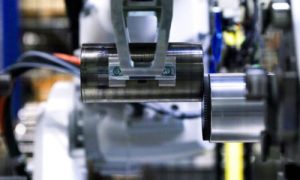
Yes, in many cases. As a general guide, a bearing can often be remanufactured two to three times when removal is well timed and the operating conditions allow it.
In some heavy industrial applications, the number of remanufacturing cycles can be higher. This should not be treated as a fixed guarantee. It depends on bearing type, operating conditions, lubrication, contamination, storage, handling, application severity, previous damage, and timing of removal.
The practical principle is simple: the earlier deterioration is identified, the more options remain available.
11. When should a bearing be removed for assessment?
Correct timing is essential. Predictive maintenance helps identify the right point for bearing removal. This supports the balance between long service life, low operating cost, and remanufacturing suitability. A bearing that has suffered severe damage may no longer be technically or economically suitable for remanufacturing.
12. What does the SKF remanufacturing process involve?
The process follows a structured assessment and quality-control route.
A simplified process flow is:
- Dismounting
- Disassembly
- Cleaning
- Pre-inspection
- Inspection
- Machining or remanufacturing work, where required
- Reassembly
- Final inspection
- Packing and return
SKF also uses traceability systems. Each asset is uniquely marked during the remanufacturing process so the bearing can be traced through its future lifecycle.
Practical Decision Checklist
Before replacing a large bearing, ask:
- Has the bearing been removed before severe damage occurred?
- Is it large, specialised, or high value?
- Is a new bearing difficult to source quickly?
- Could assessment reduce unnecessary replacement cost?
- Is manufacturer-backed remanufacturing important for this application?
- Is SKF Warranty support important?
- Has condition monitoring identified early-stage deterioration?
- Could remanufacturing support lifecycle cost reduction?
- Could the bearing be remanufactured again in future if managed correctly?
- What happens to the bearing after removal?
Key Takeaway
SKF Bearing Remanufacturing is not the same as a general bearing repair.
For suitable bearings, it provides a manufacturer-backed route to recover value from an existing bearing asset. Suitability must still be confirmed through inspection and SKF assessment before any bearing is returned to service.
The benefits are practical:
- reduced replacement cost where the bearing is suitable
- lower carbon footprint and energy consumption
- documented CO2 emissions reduction information
- shorter lead-time exposure where applicable
- SKF standards and acceptance criteria
- full traceability
- SKF Warranty with the same duration as new bearings
For large bearings removed at the right time, remanufacturing gives maintenance teams a practical option before scrapping or replacing.
Where large bearings are coming out during a planned shutdown, or where high-value bearings are sitting in stores with uncertain history, assessment should be considered before they are scrapped or replaced. B2K can support the process by helping customers identify suitable bearing candidates, coordinate the assessment route, and access the SKF Bearing Remanufacturing channel.